 By taxclubadmin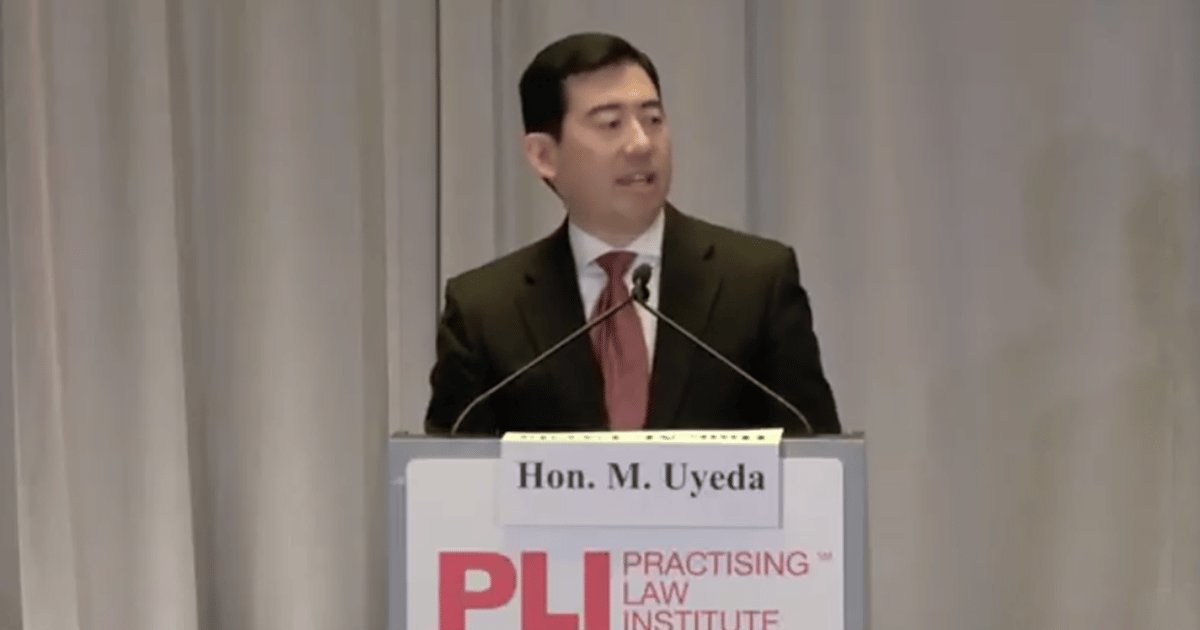
The U.S. Securities and Exchange Commission is not shying away from the Trump administration’s push to clear the regulatory pathway for 401(k) savings plans to include private marketing investing.
Speaking Friday at the Pinpoint Policy Institute in Alexandria, Va., SEC Commissioner Mark Uyeda argued that the benefits of democratizing private-market investing outweigh the risks when done properly.
“The notion that a zero allocation to private assets is somehow inherently safer or more desirable than a diversified allocation is not investor protection,” he said. “It is not the government’s role to impose its judgment as to what opportunities investors may pursue, particularly when those choices are often being made by a fiduciary.”
Uyeda made the comments after months of disruption in the private credit market. Private credit funds managed by firms including BlackRock, Blackstone, Blue Owl, Morgan Stanley and Cliffwater have faced a surge in investor redemptions, leading them to cap withdrawal amounts. That type of disruption is why private market investments and other alternatives have faced regulatory and legal challenges to inclusion in 401(k) plans—many of which are funded through automatic employer defaults set by the plan.
Ary Rosenbaum, an ERISA and retirement plan attorney at The Rosenbaum Law Firm, said the recent private credit jitters “don’t really kill the push to bring private markets into 401(k) plans,” but it may make people more cautious due to heightened legal risk.
“The reality is that the biggest hurdle was never whether regulators would allow it; it’s always been a litigation risk,” Rosenbaum said. “When you start seeing headlines about valuation concerns and liquidity questions involving major players like BlackRock or Blue Owl, that gives plaintiffs’ attorneys a much better story to tell, and I don’t think there is a plan sponsor that wants to be the test case.”
The Trump administration, for its part, has argued that restrictions by the Department of Labor and the SEC on such investments are keeping everyday savers from benefiting from gains institutional investors have been realizing for decades, including in defined benefit pension plans. In August 2025, President Donald Trump issued an executive order aimed at easing the path for private equity, real estate and cryptocurrency to be included in 401(k) plans, and the DOL has been considering a proposal since Jan. 13, according to a filing with the White House’s Office of Management and Budget.
On Friday, Uyeda continued to make the case that excluding alternatives from 401(k) plans denies everyday savers the potential to benefit from investments.
“Until now, the benefits of private market investing have been reserved for institutional investors—the pension funds, endowments, family offices and sovereign wealth funds—while retail investors saving for retirement have been effectively excluded,” he said. “The disparity is difficult to ignore.”
He also made the case that, as long-term savings, 401(k) plans are well-suited to illiquid investments that aren’t meant to be tapped in the near term.
“Private investments are illiquid, complex and sometimes unsuitable for retail investors—but this framing gets the analysis backwards,” he said. “Retirement savers are often long-term investors, and private investments can offer a premium for that illiquidity. For long-term investors saving for retirement, this trade-off cannot only be acceptable, but desirable.”
Uyeda said the SEC is doing what it can to make alternatives available to more savers, including lifting a 15% cap on investments in private funds for closed-end funds, which allow for intra-day trading. It is also working with the DOL to clarify fiduciary rules and safe harbors for putting savers into alternative investments.
The latter is particularly important for protecting employers and their plan sponsors from litigation. In his initial executive order, Trump referred to “burdensome lawsuits that seek to challenge reasonable decisions by loyal, regulated fiduciaries.”
Tim McGlinn, an investment analyst who writes about the risks of alternative investing, noted that some plan sponsors do already include alternative investments in their 401(k) plans, and doesn’t believe the government should block them altogether. But he does think advisors and investors should be wary of what he sees as a “propaganda” push by alternative providers, particularly when it comes to their fiduciary duty of finding the best price for comparable investment options.
McGlinn said the recent negative headlines about private credit funds will likely affect how advisors view their inclusion in employer-sponsored retirement plans.
“I think that it focuses the mind of fiduciaries,” said McGlinn, who is the founder of the Substack The Alt View. “I’m not going to predict whether there will be increased defaults among private credit products, but I will say that it is very important [for advisors and investors] to consider the pricing for different types of private credit.”
McGlinn noted that the price of private investments that are made available through publicly traded funds are now cheaper than those being offered through private placement to investors. That price difference would mean a fiduciary has the obligation to put a client in the lower-priced, similar product, or to avoid “this dilemma” altogether by not investing in the products at all.
In his analysis, McGlinn has found that private-market investment returns after fees have been “middling” compared to public-market returns. Combine that with higher embedded fees for an investment product like a target date fund popular with 401(k) plans, and any gains may be wiped out. There is, however, a strong incentive for alternative asset managers to make the case for getting their products into the $14 trillion defined-contribution market via target-date funds, according to McGlinn.
“One of the things I suspect motivates the industry on target-date funds is that not a great deal of attention is paid to what’s in them by the investor—the language used by the industry is ‘set it and forget,’” he said. “And since the allocation within said funds will never be enormous, bad performance, if it comes to pass, will be easy to ignore.”
Trump first sought to ease inclusion of private markets in 401(k)s with an executive order during his first term, which the Biden administration rescinded. Earlier this year, Trump’s DOL also rescinded a Biden-era order discouraging the use of crypto in defined-contribution plans. The Pinpoint Policy Institute, where Uyeda spoke, supports the availability of alternatives in 401(k) plans.
Attorney Rosenbaum still sees alternatives coming into retirement savings, but perhaps with a shift in approach.
“You’ll see private markets come in more through target date or diversified fund structures, with smaller allocations and stronger fiduciary guardrails,” he said. “At the end of the day, the issue isn’t access, it’s survivability. It’s about whether a plan sponsor can’t defend the decision in court, they’re not going to take the risk, and these developments just reinforce that reality.”